Classify your protein requirement by weight, age and sport. Learn how digestion works, which foods provide protein and when products can complement a balanced diet.
Published on
·13 min read
Image: saneq
Protein, also called protein, is part of your daily diet. How much you need depends, among other things, on your body weight, age and training. Here you will find guidance for your daily requirement, the path from food to blood and practical examples for your meals.
A guide from the saneq editorial team based on SSN, FSVO, DGE, EFSA, FAO and Swiss food law. The product examples come from our range; no own practical test was carried out. Product nutritional values are manufacturer information according to saneq shop, as of 30.09.2026. Calculations are marked as such.
What are proteins and what does your body need them for?
Proteins are nutrients made up of amino acids. Your body uses these building blocks for its own proteins, such as structural proteins in muscles, enzymes and transport proteins in the blood.
Nine amino acids are considered essential: they must be supplied with food. Others can be produced by the body under normal conditions. Body proteins are continuously built up and broken down; therefore, protein regularly belongs on the menu.
Protein contributes to an increase in muscle mass and the maintenance of muscle mass. In addition, protein contributes to the maintenance of normal bones. These are the nutrient protein statements approved under Swiss food law.
How much protein do you need per day?
For healthy adults aged 19 to under 65 years, the DGE specifies 0.8 g protein per kg body weight per day. For everyday life in Switzerland from about 60 years of age, we orientate ourselves on the SSN rule of thumb of around 1.0 g/kg; with ambitious sport, the requirement can be higher.
The following table shows editorial calculation examples: body weight × reference value. The DGE values assume normal weight. In cases of underweight, overweight or illness, individual classification is necessary. Separate recommendations apply for children, pregnancy and breastfeeding.
All results are grams of protein per day from all foods, including supplementary products. The sports range applies according to the DGE position paper for more than 5 hours of training per week, depending on training status and goal. The columns are not added together.
Example weight
Everyday life: 0.8 g/kg (DGE)
From about 60: 1.0 g/kg (SSN)
Ambitious sport: 1.2–2.0 g/kg (DGE)
50 kg
40 g
50 g
60–100 g
60 kg
48 g
60 g
72–120 g
70 kg
56 g
70 g
84–140 g
80 kg
64 g
80 g
96–160 g
90 kg
72 g
90 g
108–180 g
Example: 70 kg × 0.8 g/kg results in 56 g per day. The weights are calculation examples, not target weights. In older age, the separate orientation of the SSN must be observed.
What changes with age?
The SSN specifies around 1.0 g/kg per day from about 60 years of age. The DGE sets its estimate of 1.0 g/kg from 65 years. The different age limits do not mean a sudden change on a birthday.
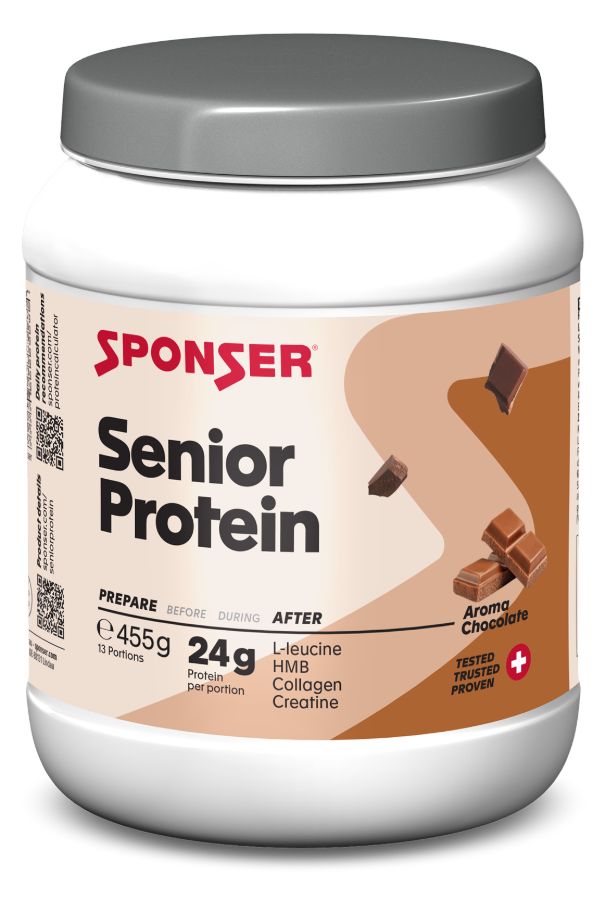
If appetite decreases, small meals can make supply difficult. If the usual foods are not sufficient, Sponser Senior Protein can be considered as a supplement to a balanced diet. Chocolate flavour: 35 g powder provide 23.1 g protein. In case of persistently low appetite or unintended weight loss, professional clarification is important.
When does the need increase due to sport?
Recreational sport does not automatically mean a higher protein requirement. For more than 5 hours of training per week, the DGE specifies 1.2–2.0 g/kg daily. The appropriate amount depends on the training; the upper value is not a general target. Age and sport values are also not added here.
Even in sport, supply can often be achieved with foods. If a gap remains, these products show various complementary protein sources:
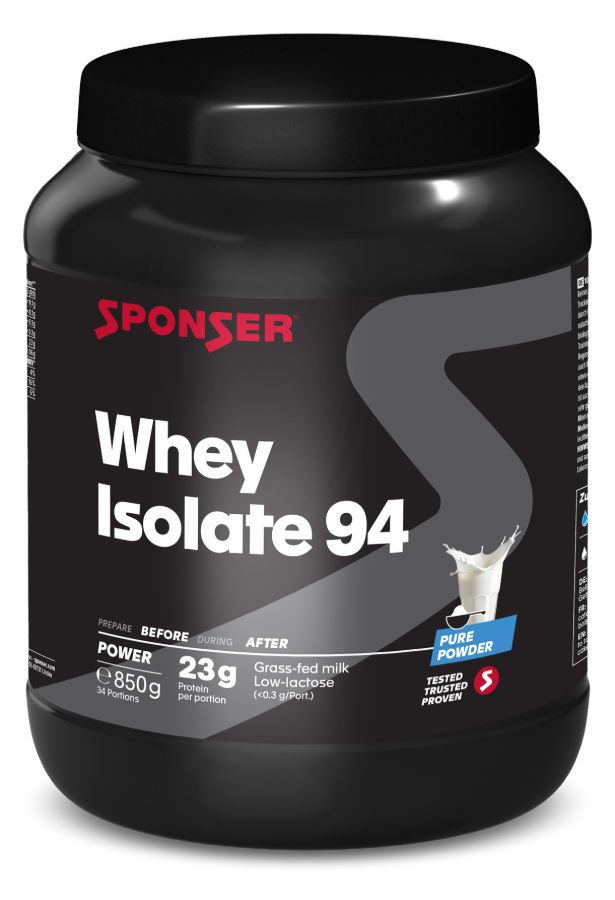
Sponser Whey Isolate 94: whey protein isolate. Neutral flavour: 25 g powder provide 21.8 g protein.
Powerfood One Boom Whey: whey protein concentrate and isolate. Vanilla Ice flavour: 30 g powder provide 22.4 g protein.
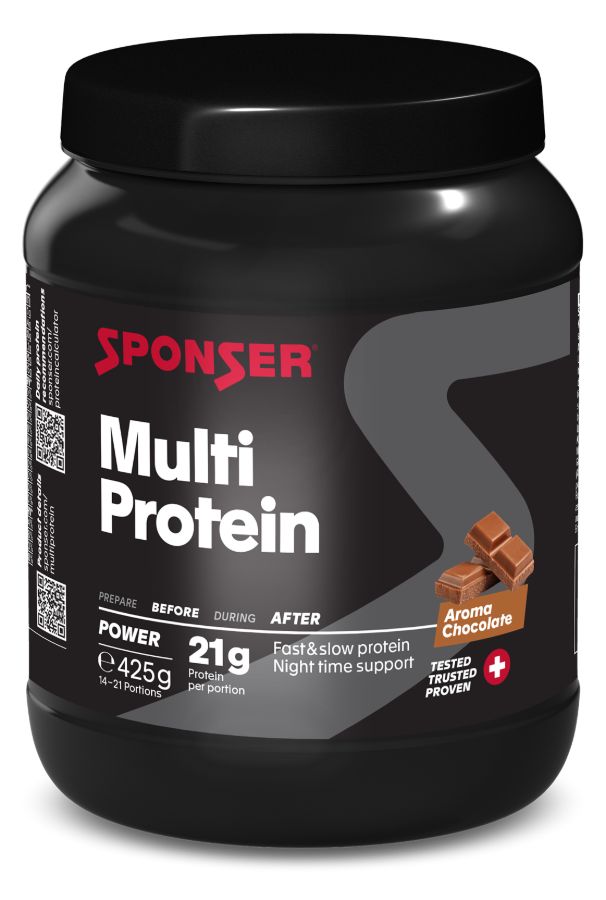
Sponser Multi Protein: blend of whey, casein and egg protein. Chocolate flavour: 30 g powder provide 21 g protein.
These amounts count towards the daily requirement. The information refers to the powder without milk or other ingredients and is not an individual dosage recommendation. Slight variations depending on flavour; check the nutritional information of your variant. This also applies to the other product examples.
How does your body digest and absorb protein?
Your body breaks down dietary protein in the stomach and small intestine into smaller components. Amino acids pass from the small intestine into the blood and are then available for further metabolic processes.
In the stomach, splitting begins through digestive enzymes such as pepsin. The long protein chains are gradually broken down.
In the small intestine, enzymes from the pancreas and intestinal mucosa continue the breakdown.
The amino acids are absorbed through the small intestinal mucosa. They enter the liver and other body areas via the blood.
Digestion, absorption and utilisation are different steps: first the protein is broken down, then its building blocks are absorbed. What the body forms from it or uses for energy production is another process. Faster absorption therefore does not automatically mean more muscle growth.
There is no freely refillable protein depot like a fat store. Excess amino acids can be broken down; their nitrogen is excreted, among other things, as urea in the urine. An additional portion is therefore not automatically completely converted into muscle protein. The basic digestive pathway is described by the FAO.
How can your body use protein well?
For everyday life, a demand-oriented amount, different protein sources and appropriate preparation count. In healthy people, digestive enzymes and transport mechanisms are usually not the limiting factor for absorption according to EFSA.
Protein quality includes the pattern of essential amino acids and their availability after digestion. The FAO evaluation of protein quality therefore considers more than just the pure gram amount. For your meals, a practical rule can be derived from this: vary the sources.
Kitchen steps such as heating or germination can influence availability. The effect depends on the food and processing; longer or stronger heating is not generally better. Prepare legumes according to the respective cooking instructions.
Which foods provide protein?
Dairy products, legumes, tofu, eggs, fish and meat provide protein. Bread, oatmeal, nuts and seeds also contribute to the daily amount; the amount of food is not equivalent to the amount of protein.
The examples come from the DGE food table. They are rounded orientation values per specified portion, not a ranking and not identical meal sizes. The amounts refer to the edible portion and the stated preparation state.
Food and condition
Example portion
Protein per portion, approx.
Cow's milk, 1.5 % fat
200 ml
6 g
Yoghurt, 1.5 % fat
150 g
4.5 g
Oatmeal
60 g
8 g
Tofu, cooked
100 g
16 g
Lentils, cooked
120 g
11 g
Egg, cooked, without shell
60 g
7 g
Trout, cooked
150 g
35 g
Wholemeal bread
50 g
3.5 g
Emmental cheese, min. 20 % fat in dry matter
30 g
10 g
The Swiss nutrition recommendations from SSN and FSVO specify 2–3 portions of dairy products daily for healthy adults aged 18 to 65 years, as well as another portion from the group legumes, eggs, meat and others. The age-related SSN document recommends three dairy product portions plus another protein source.
These food portions do not all contain the same amount of protein. A Swiss portion of legumes corresponds, for example, to 60 g raw weight; the lentil line above shows 120 g cooked lentils. The amounts are not interchangeable. Vary the sources over the week; daily meat is not necessary for this.
How do plant and animal proteins differ?
They differ in their amino acid pattern and digestibility. Animal sources usually contain all essential amino acids in a favourable ratio; with plant sources, combining different foods helps.
Image: saneq
This does not mean that plant protein is fundamentally inferior. Cereals and legumes complement each other: cereals provide relatively little lysine, legumes relatively little methionine. According to the SSN, it is sufficient to eat both groups within one day; they do not have to be on the same plate.
Ideas for a plant-based day include oatmeal with soy drink, lentils with whole grains, and tofu with vegetables and a side dish. Nuts and seeds complement the selection. This is a collection of combination ideas, not a calculated complete nutrition plan.
For the kitchen, peanut products can also be considered as a supplement to a balanced diet: Powerfood One Peanut Butter, creamy variant, contains 27 g protein, 52 g fat and 635 kcal per 100 g. It is therefore an energy-rich food, the amount of which should fit the entire meal.
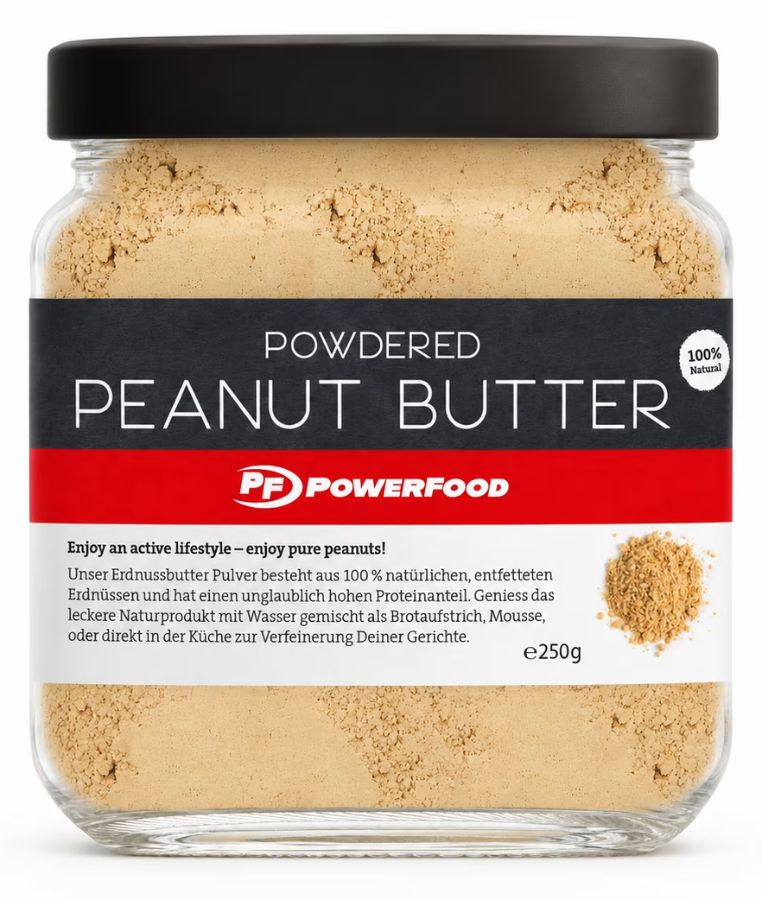
Powerfood One Powdered Peanut Butter is a defatted peanut ingredient. Neutral flavour: 100 g product contains 42 g protein. This is a reference quantity for nutritional value comparison, not a recommended portion. Both peanut products complement the variety of legumes, cereals and other foods.
How do you distribute protein sensibly throughout the day?
Consider a protein source at each main meal and, if necessary, at a snack. The FSVO especially recommends distribution throughout the day in old age; the SSN provides examples with breakfast, mid-morning snack, lunch and dinner.
Image: saneq
The following mixed diet example combines rounded DGE values according to a daily structure of the SSN. Only the listed protein components are counted. Vegetables, fruits, other side dishes, fats and the remaining energy supply are additionally part of a complete meal plan.
Meal time
Protein components
Protein from it, approx.
Breakfast
60 g oatmeal + 200 ml milk, 1.5 % fat
14 g
Mid-morning snack
150 g yoghurt, 1.5 % fat
4.5 g
Lunch
150 g trout, cooked, as part of a meal
35 g
Dinner
50 g wholemeal bread + 30 g Emmental cheese, as above
13.5 g
Total
Only the listed components
67 g
Calculated editorially: 8 + 6 = 14 g at breakfast and 3.5 + 10 = 13.5 g in the evening. Together this gives 14 + 4.5 + 35 + 13.5 = around 67 g. The example is not a daily fish or quantity specification; adjust meals and selection to your needs.
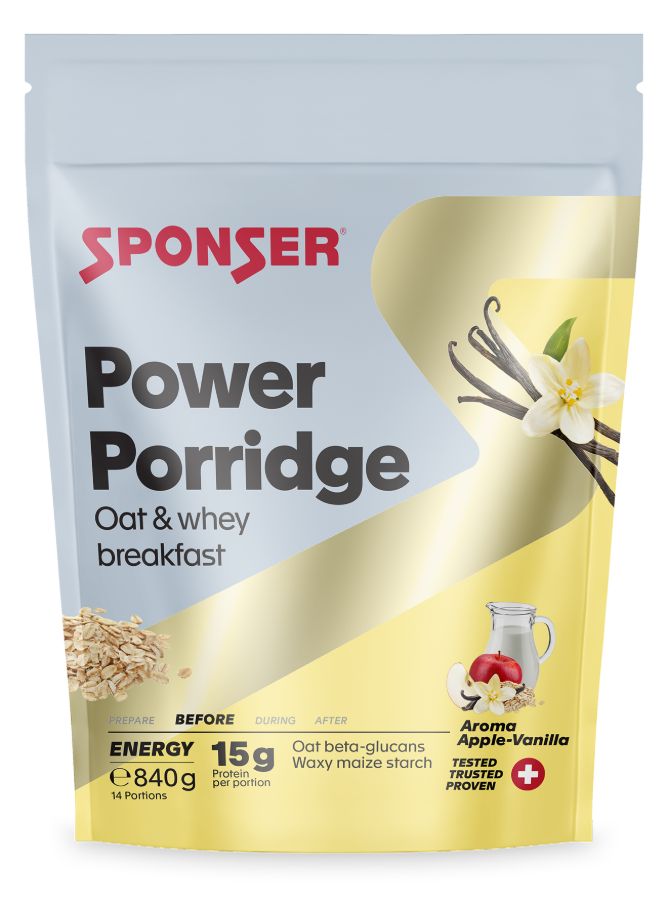
If your breakfast so far mainly consists of bread, butter and jam, milk, yoghurt, cheese or an egg can be added. As another breakfast option from our range, Sponser Power Porridge provides 11.4 g protein with 60 g dry product. Milk or other preparation ingredients are not included in this.
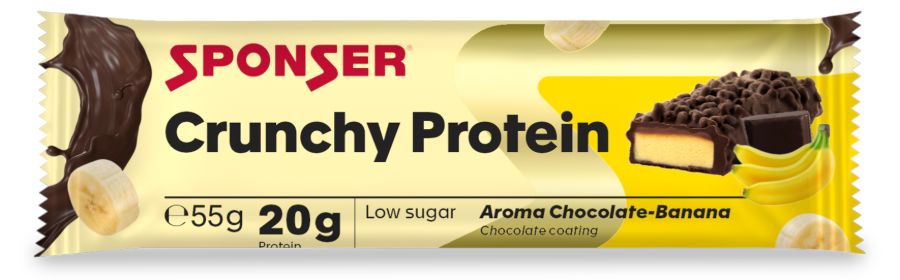
On the go, a Sponser Crunchy Protein Bar can occasionally complement: Chocolate-Banana flavour, 55 g bar, 19.8 g protein. Porridge and bars are to be classified as a supplement to a balanced diet; the bar does not replace a complete meal.
When can protein products complement your diet?
Protein products can be practical if you do not meet your needs with the usual meals. The decisive factor is the actual supply gap: an additional product is not necessary solely because of your age or a training plan.
According to the DGE position paper, protein supplements are usually not necessary for athletes either. First check your foods and portions. If you supplement, consider the ingredients, allergens, tolerability and contribution to the overall diet in addition to the protein content.
The seven examples from Sponser and Powerfood One address the described situations: Senior Protein for a supply gap in old age, three different protein powders in everyday sport, Power Porridge at breakfast, Powdered Peanut Butter as a plant-based kitchen ingredient and Crunchy Protein on the go.
Protein products for different everyday situations
What questions are frequently asked about protein?
Frequently, it is about the appropriate daily amount, the choice of foods and special life situations. The answers refer to the basics explained above.
Frequently asked questions
For more than 5 hours of training per week, the DGE specifies 1.2–2.0 g/kg per day, depending on training status and goal. This includes protein from the entire diet. More powder alone does not replace appropriate training.
The SSN specifies around 1.0 g/kg daily from about 60 years of age. The DGE uses the same figure from 65 years as an estimate. In case of illness, the amount must be individually classified.
In healthy people, digestion through the stomach and small intestine usually works without special aids. Choose different protein sources, prepare foods appropriately and distribute them over your meals. This does not imply a rigid intake limit per meal.
Note your usual foods and portions. Compare their protein contribution with the guidance suitable for you. Fatigue or other non-specific complaints do not prove protein deficiency. In case of doubt, qualified nutritional advice helps; complaints should be medically clarified.
There is no general winner source. The decisive factors are the combination of your foods, the amino acids contained, your tolerance and the rest of the diet. Plant and animal foods can contribute to supply.
The DGE specifies around 7 g protein for a cooked egg with 60 g edible portion. The shell is not included. The amount varies depending on egg size.
This cannot be answered generally. Your illness and the amount agreed with your treating specialist are decisive. Do not increase or reduce protein and supplementary products independently based on general tables.
Would you like to classify the differences between protein powders afterwards? The guide Which protein powder suits me? will guide you through the selection.
Still unsure?
We support you with questions about our products and variants. In case of illness, persistently low appetite or unintended weight loss, please contact your doctor or a qualified nutritional counselling service.