Whey, clear whey or plant protein? First check your needs. This guide shows the differences, explains portion calculation and compares specific package sizes with prices per portion.
Published on
· Updated on
·12 min read
Image: saneq
The right protein powder fills a specific gap in your diet and suits your intolerances, taste, and budget. Here you will learn how to assess your needs and fairly compare packages.
This guide by the saneq editorial team is based on nutritional recommendations, position papers, and manufacturer declarations. The product examples come from our range. We have not conducted our own laboratory, taste, or practical tests. Research and price status: September 2026.
Do I need protein powder and how much protein is sensible?
Protein is found, for example, in dairy products, eggs, legumes, and tofu. The Swiss Society for Nutrition (SSN) shows that needs can be met with a balanced diet. Even with a plant-based diet, powder is not automatically necessary.
Protein contributes to an increase in muscle mass and the maintenance of muscle mass. This statement concerns the nutrient. It does not promise that a specific powder alone builds muscle. A varied, balanced diet and a healthy lifestyle form the basis.
The following table distinguishes general reference values from recommendations for physically active adults. All amounts include food and drinks together. They are not an additional powder amount.
Classification and source
Protein per kg of body weight per day
Calculation example: 70 kg
Adults, 18–65 years; SSN 2026
0.83 g
58.1 g per day
Adults, 66 years and older; SSN 2026
1.0–1.2 g
70–84 g per day
Adults aged 65 and over; DGE, estimated value
1.0 g
70 g per day
Ambitious sport; DGE position paper 2020
1.2–2.0 g
84–140 g per day
The age limits of the sources differ: SSN states 66 years, DGE already 65 years. For younger adults, DGE states 0.8 g instead of the Swiss value of 0.83 g. The values are not additive. The examples serve as a guide for normal weight; for significant overweight or underweight, individual calculation is advisable.
The sport range refers to a corresponding training volume and is adjusted according to load and training goal. DGE roughly defines this range at five training hours per week. Occasional training does not automatically require aiming for the upper value.
First note your usual meals and their protein amounts. Only then can it be assessed whether a supplement is missing. In case of low appetite or unintended weight loss in old age, have the entire diet professionally assessed. A product for seniors does not replace this assessment.
How do I find the right type of protein?
First clarify tolerance: Do you need to avoid milk protein, or is it about milk sugar? These are different questions.
Choose the desired preparation: creamy shake, fruity drink, or neutral powder to stir in.
Read the ingredients and nutritional values of the specific flavour. Product names and numbers on the front are not sufficient for comparison.
Start with a manageable package. Compare the price only when source, taste, and preparation suit you.
Type of protein
What is behind it?
What should you pay attention to?
Whey concentrate
Concentrated whey protein from milk.
Note milk protein and possible lactose content.
Whey isolate
Whey protein more separated from other milk components.
Not automatically lactose-free. The finished formulation counts.
Whey hydrolysate
Whey protein partially split into smaller peptides.
The term describes the processing, not a guaranteed added benefit.
Clear whey
Whey protein for a clear, often fruity drink.
Remains milk protein; do not confuse with a vegan drink.
Casein
Another protein fraction of milk, digested more slowly than whey.
Note milk allergy. Taking it before sleep is not mandatory.
Multi-component protein
Mixture of different protein sources.
Check the sources individually; possible are milk, egg, and plant components.
Plant protein
For example from soy, pea, or rice, alone or mixed.
Check source, blend, and allergens. Vegan does not mean allergen-free.
The processing of concentrate, isolate, and hydrolysate is described in the ISSN position paper. Clear whey is mainly a different beverage form. Do not choose a hydrolysate solely because you assume more processing automatically means better for you.
Blends are also no quality guarantee. The decisive factors remain the specific composition and your overall diet. You do not need to memorise a ranking of "biological value" for selection. Check the information that actually affects your daily life: ingredients, portion, tolerance, and price.
What applies in case of allergies or health restrictions?
Lactose intolerance concerns milk sugar, whereas milk protein allergy concerns protein components of milk. The allergy centre aha! explicitly distinguishes these. Pay attention to the exact declaration: "low lactose" and "lactose-free" are not interchangeable.
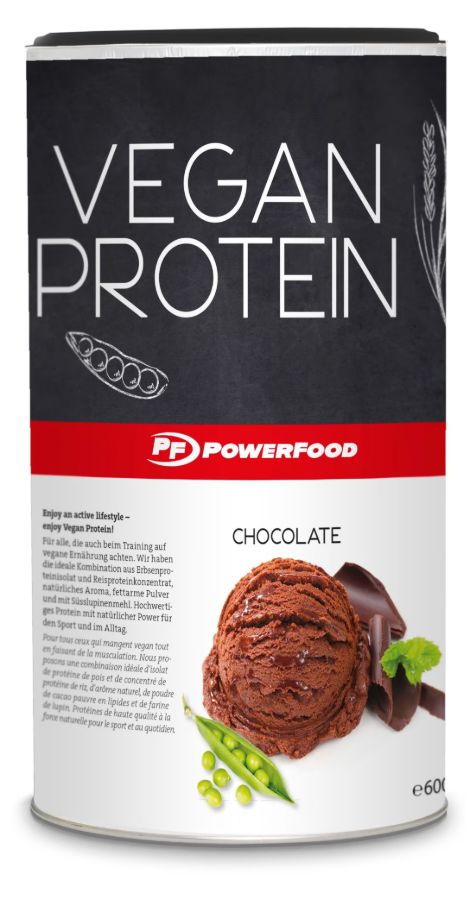
Also check plant-based formulations. Powerfood One Vegan Protein contains pea and rice protein as well as lupine flour in the tested vanilla flavour. With a relevant allergy, this product is also not an alternative. New complaints should be clarified rather than classified by repeated self-experiments.
How much protein is actually in a portion?
Grams of powder are not grams of protein. Calculate: powder amount × protein per 100 g ÷ 100. The following values apply exclusively to the mentioned flavours. They come from the respective manufacturer declarations, retrieved in September 2026.
Own portion calculation, rounded to one decimal place. The amounts correspond to the manufacturer portions for preparation with water. Water adds no protein; milk or a plant drink changes the nutritional values of the finished shake. The actual manufacturer information may be rounded differently.
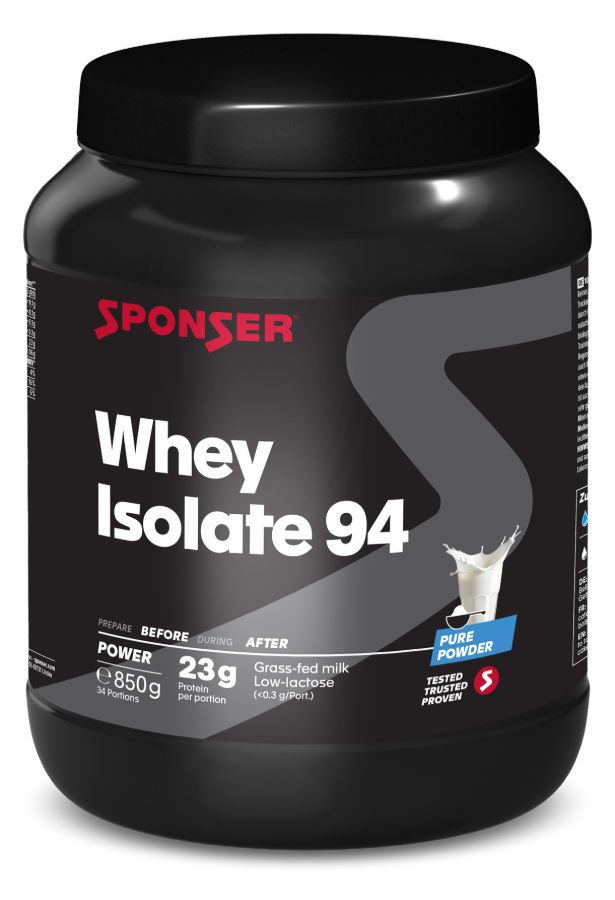
For neutral Whey Isolate 94, the calculation is 25 × 87 ÷ 100 = 21.75 g protein. Therefore, you should not use the number "94" in the name as 94 g protein per 100 g of this powder. Likewise, you should not transfer values of a neutral flavour to chocolate or vanilla.
Weigh the powder amount at least for the first mixing. A heaped scoop is not a reliable gram measure. For purchasing, compare the 100 g values; for your daily planning, use the actually prepared portion.
What does a portion cost and is a 5-kg package worthwhile?
A low price per can says little about the cost per use. The table uses the same flavours and powder portions from the respective manufacturer declarations as above. These are saneq shop prices without shipping, status September 2026.
Calculation: package price × portion size ÷ package content. The result is rounded to two decimal places only at the end. Residual amounts are included in the calculation. The price per portion here compares portions with different protein amounts; it is not a quality ranking.
For the neutral whey, 1500 g equals exactly 60 calculated portions, 5 kg equals 200. The larger package costs around CHF 0.09 less per 25 g but requires CHF 197.00 more capital at purchase. This difference is calculated from the unrounded portion prices.
With one portion daily, 5 kg would theoretically last for 200 days. This is neither a dosage recommendation nor a best-before indication. Please check consumption, storage instructions, and expiry date. If you are not yet familiar with the flavour, a smaller package may be the more sensible choice despite the higher price per portion.
When should I drink the shake and how do I mix it?
First plan your daily intake. A shake can fit into a meal or around training. There is no mandatory time window of a few minutes after training. The SSNS fact sheet from December 2025 places more emphasis on the daily amount than on a specific intake time.
The ISSN gives a general guideline for athletes of 20–40 g protein per intake, distributed throughout the day. This refers to protein from the entire meal or snack, not automatically an additional powder portion. Age, body weight, and training load influence the assessment.
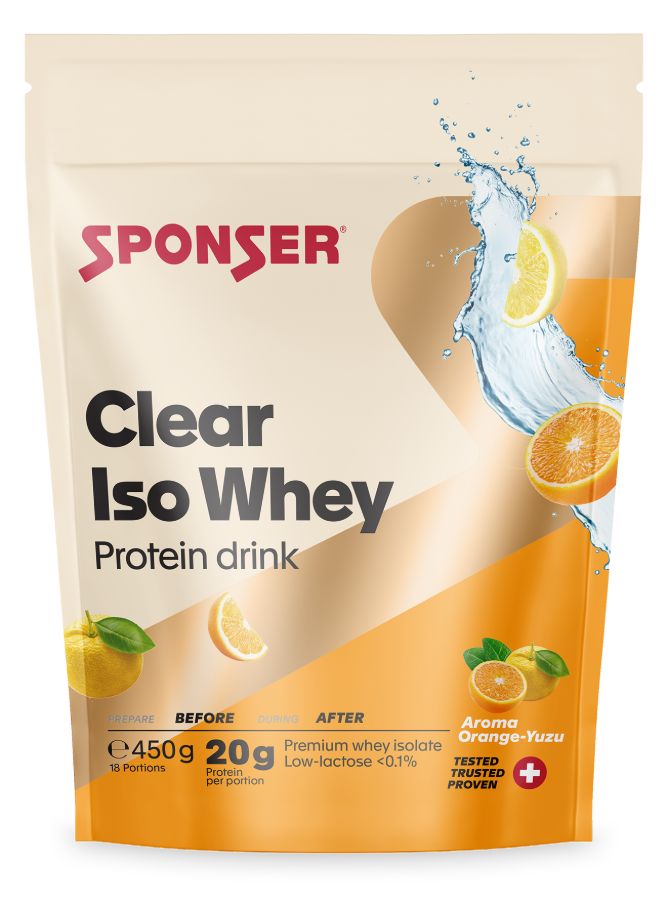
Follow the instructions for mixing the specific flavour. Sponser recommends 25 g powder with 500 ml water for Clear Iso Whey Orange-Yuzu. More powder with less water changes concentration and taste. Those who prefer a creamy shake should consider classic whey or multi-component formulations.
Which products show the differences in the range?
The following seven titles represent different selection questions. The order is not a rating. Use the respective product link to choose the specific flavour and package size.
Sponser Whey Isolate 94: Example of whey protein isolate. The neutral flavour above serves as the basis for comparing two package sizes.
Powerfood One Boom Whey: The tested Vanilla Ice flavour combines whey protein concentrate and isolate. An example of a classic whey blend.
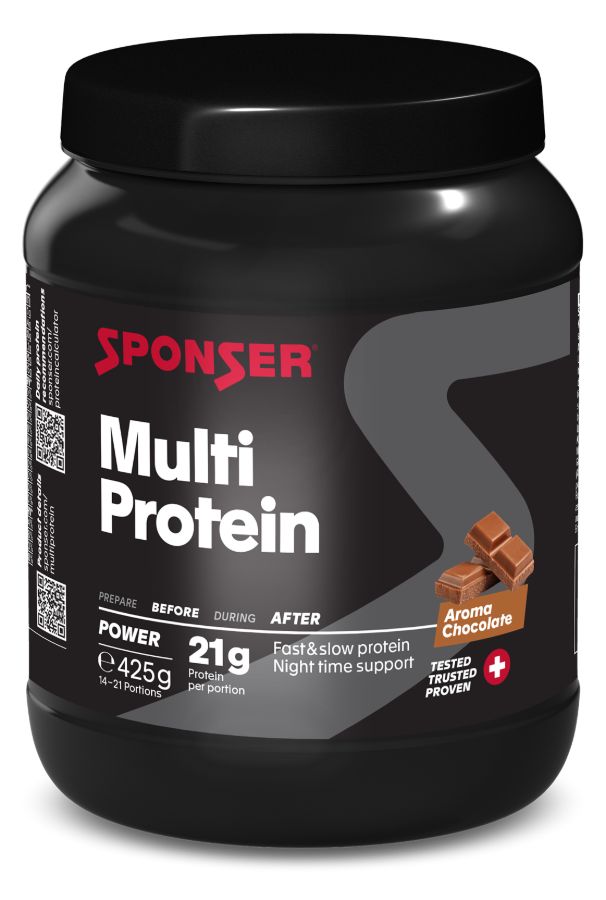
Sponser Multi Protein: For comparing a multi-component powder. Chocolate contains milk, whey, and egg protein; note the allergens.
Sponser Clear Iso Whey: For a fruity drink with water. The manufacturer's site describes Orange-Yuzu as low in lactose; a milk protein allergy excludes use.
Powerfood One Vegan Protein: Plant-based option with pea and rice protein. Lupine should also be noted in the vanilla flavour.
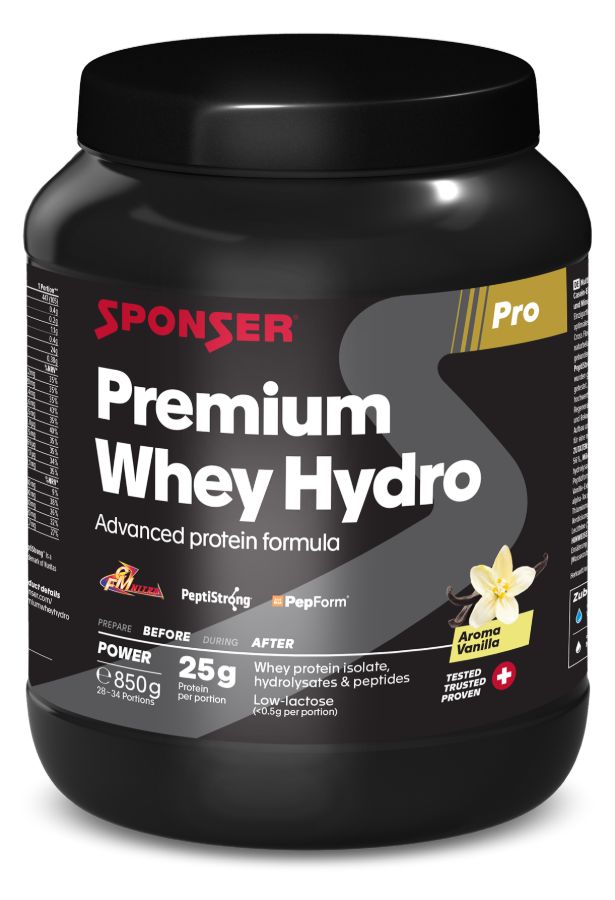
Sponser Premium Whey Hydro: Example of a formulation with hydrolysed proteins and other protein sources. Check the full ingredient list rather than just the "Hydro" addition.
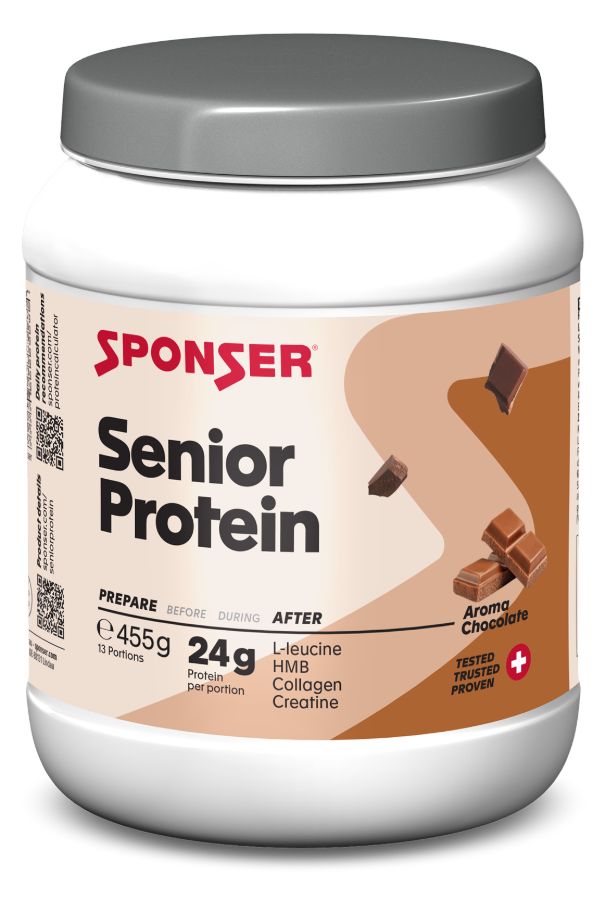
Sponser Senior Protein: Example of an enriched formulation with milk protein and bovine collagen. Discuss possible overlaps of supplements with your healthcare professional if you are already supplementing.
First check whether a supplement is necessary. If you tolerate milk and want a classic shake, whey formulations are an option. For a plant-based diet, check for a correspondingly declared alternative. An expensive hydrolysate is not a prerequisite for starting.
No. We compare declared properties and calculate portion costs. We do not have our own measurements of contaminants, solubility, or taste. An independent quality seal or test result cannot be inferred from inclusion in this guide.
That cannot be answered without your preferences. First decide between neutral, creamy, and fruity. Test a small package with the intended amount of liquid. Taste, sweetness, and consistency can vary between flavours of the same product line.
Age alone does not justify a specific product choice. Nutrition, body weight, activity, and health status are decisive. The general reference values are given per kg of body weight. Therefore, check your needs instead of choosing solely based on a label such as "for women".
An additional shake also provides extra energy. The label "Low Carb" does not guarantee weight loss. Compare the energy and carbohydrates of your actual preparation. A regular protein powder is not automatically a full meal replacement.
A powder does not treat osteoporosis. Discuss nutrition, calcium, vitamin D, exercise, and treatment with your healthcare professional. A varied, balanced diet and healthy lifestyle remain important.
A general approval would not be sensible. Have your needs and specific ingredients checked by your doctor or a nutrition specialist. Pay special attention to additional vitamins, plant extracts, or caffeine. Sports recommendations for adults are not pregnancy recommendations.
Still unsure? Our team is available by phone Monday to Friday from 8 a.m. to 5 p.m. at +41 56 511 60 99 to advise you on the range, ingredients, and package sizes. Please discuss medical questions with your treating healthcare professional.