Mass gainer: who is it useful for and how do you take it?
A mass gainer supplements your diet when you train hard and need extra energy. Find out when it is useful, how to take it and how gainers, whey and homemade shakes differ.
Published on
·12 min read
Image: saneq
A mass gainer can be useful if you train hard and your regular meals do not provide enough energy for a positive energy balance. The shake supplements your diet and training. Here you can find out when it fits, how to plan your intake and when whey or a homemade shake might be an option.
Guide by the saneq editorial team based on Swiss Sports Nutrition Society factsheets, authorised health claims and manufacturer information; products from our range; we have not tested the products ourselves.
What is a mass gainer?
A mass gainer, also called a weight gainer, combines carbohydrates and protein in a powder. It therefore provides more carbohydrates than the protein powders compared here. In the SSNS supplement guide, these blends range from around 5:1 to 1:1 in their ratio of carbohydrates to protein.
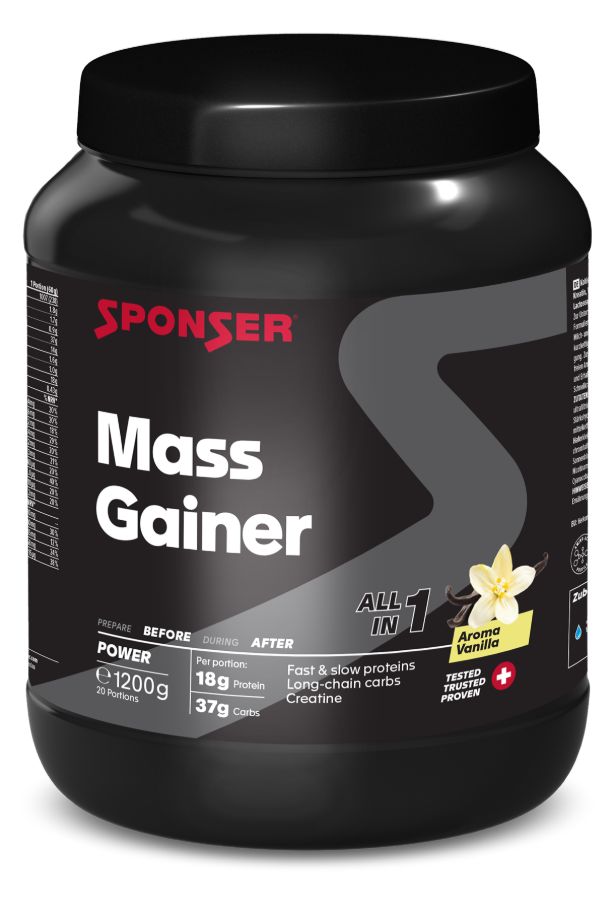
For Sponser Mass Gainer, this ratio is around 2:1. A serving of 60 g of powder provides 238 kcal and 18 g of protein. For Powerfood One Mass Builder, it is around 3:1, with 385 kcal and 20 g of protein per 100 g serving. The difference in serving size partly explains the gap.
Added ingredients also differ: Sponser contains creatine. Mass Builder lists creatine monohydrate, vitamins and minerals, but does not declare the creatine quantity. Pure carbohydrate products such as Sponser Carbo Loader are a separate category: they provide no protein and are not the same type of gainer.
Who is a gainer useful for?
The SSNS describes the principle as follows: “With a positive energy balance, energy intake is proportionally higher than expenditure”. Over time, such a surplus leads to weight gain. A gainer is only useful if it supplements the diet needed for hard training.
Here, a hardgainer means someone who does not gain weight despite eating regular meals. If you are a hardgainer and want to gain weight, first check whether your total energy intake matches your expenditure.
A gainer can be useful after a hard session if you do not have a regular meal within 30 to 60 minutes.
It may be an option if there are fewer than 4 hours between hard sessions and regular foods are hard to access.
It can supplement your diet if you train hard and cannot get enough energy from regular foods.
An extra gainer is not useful after light training or if your diet already meets your needs. If you do not want to gain weight, plan any extra energy intake particularly carefully.
How much energy and protein do you need?
The SSNS recommends 1.2 to 2.0 g of protein per kg of body weight per day for adults who do sport. For our example, we choose 1.6 g within this range: 70 kg × 1.6 g/kg = 112 g of protein per day. This is an example calculation, not a personal target. Count protein from both meals and shakes.
For a serving of protein per meal or drink, the SSNS gives around 0.31 g per kg of body weight. At 70 kg, this gives 70 × 0.31 = 21.7 g, rounded to around 22 g of protein. This means the amount of protein, not the weight of the powder.
For moderately intense training of up to 1 hour a day, the SSNS gives 5 to 7 g of carbohydrates per kg of body weight per day. For 70 kg, this gives 70 × 5 = 350 g to 70 × 7 = 490 g daily. This range applies to that training load and is not a general target for every daily routine.
This does not establish a fixed number of extra calories. According to the SSNS, formulas for basal metabolic rate provide only rough estimates. So also use changes in your body weight as a practical check. Weigh yourself regularly under the same conditions, for example in the morning, and adjust your servings if your weight does not change as intended over several weeks. Read more about protein needs in “Protein: how much do you need per day?”.
Mass gainer or whey: which suits you?
The table compares the stated servings of powder without milk or other ingredients. Nutritional values come from the shop's product data. Prices include VAT and are in CHF, as of November 2026. The cost is based on the specified pack for each product. Multi Protein is included as a protein blend, not pure whey.
Calculation: pack price × serving weight ÷ pack weight. Rounded to the nearest centime, this gives the following prices per serving, as of November 2026:
Mass Gainer: CHF 49.00 × 60 g ÷ 1'200 g = CHF 2.45.
Mass Builder: CHF 46.80 × 100 g ÷ 2'500 g ≈ CHF 1.87.
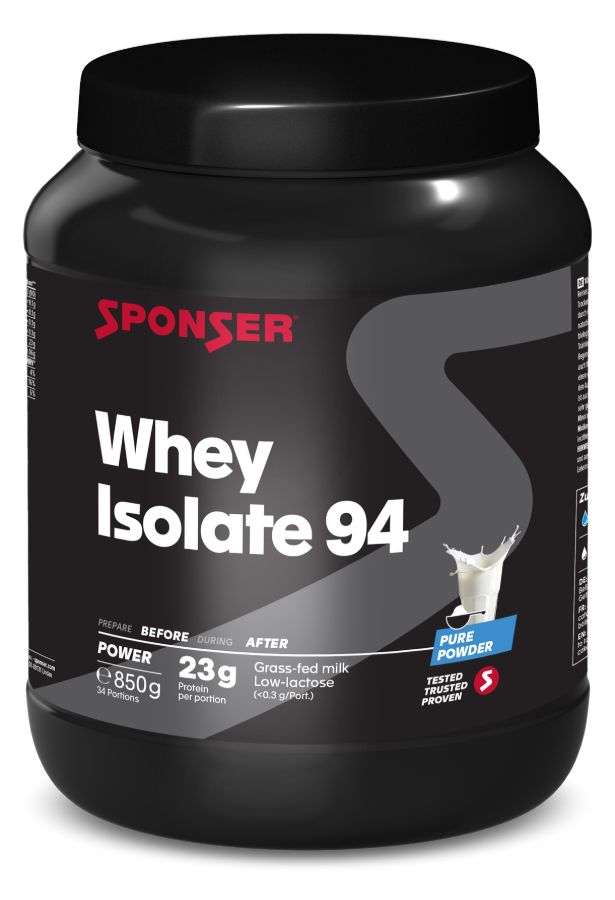
Whey Isolate 94: CHF 66.00 × 25 g ÷ 850 g ≈ CHF 1.94.
Boom Whey: CHF 49.00 × 30 g ÷ 1'000 g = CHF 1.47.
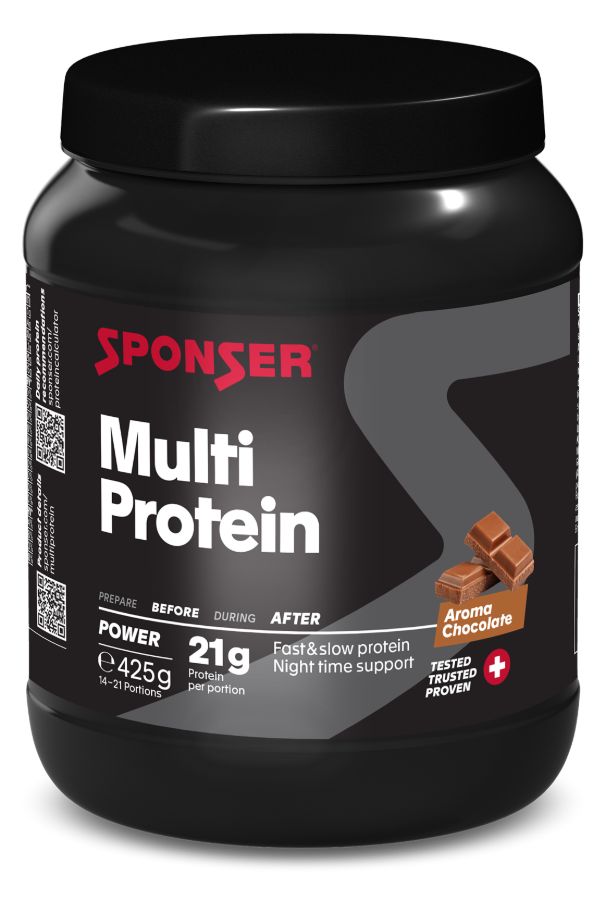
Multi Protein: CHF 56.90 × 30 g ÷ 850 g ≈ CHF 2.01.
If you lack the energy for a positive energy balance when training hard, a gainer may suit you. If you only need extra protein, whey is a better fit. Whey Isolate 94 is an isolate, while Boom Whey combines concentrate and isolate. Multi Protein contains casein, whey and egg. Serving size matters just as much as price when comparing them. You can find more protein powders in our category.
How can you make your own gainer?
For a homemade gainer, you can, for example, blend a serving of whey as specified by the manufacturer with oats, a banana and milk. Choose the amounts of oats and milk to fit your other meals. The extra carbohydrates and energy then also come from regular foods. A ready-made gainer, by contrast, offers a set blend with declared values per serving.
How much energy and protein your shake provides depends on the amounts you weigh out; use the nutritional values on the ingredient labels.
A shake is not essential either: if you have a regular meal within 30 to 60 minutes after training, the SSNS supplement guide sees no need for an additional recovery product. Plan your meals first and only add what is actually missing.
When and how do you take your gainer?
When planning your mass gainer intake, it helps to look at the manufacturer's instructions and your daily routine separately. After a hard session, a shake may fit if your next meal is still some way off. Do not drink it as an automatic extra immediately before a meal you have already planned.
Sponser specifies 60 g of powder, equivalent to 4 level scoops, in around 200 ml of cold water. The manufacturer recommends one serving each, up to around 30 minutes before and after training, for a total of 2 drinks daily.
For Powerfood One Mass Builder, the manufacturer specifies 100 g of powder in 400 ml of water. This does not establish a fixed number of daily servings.
Two servings of Sponser Mass Gainer together provide 2 × 238 kcal = 476 kcal and 2 × 18 g = 36 g of protein. A 100 g serving of Powerfood One Mass Builder provides 385 kcal and 20 g of protein. This is their contribution to the positive energy balance you are aiming for; your meals cover the rest of your energy and protein needs. These protein amounts count towards the daily total in the 70 kg example calculation above.
The SSNS specifies a good 4 hours between protein servings. Take meals and drinks into account together. This interval does not mean you need regular gainer drinks and is separate from the manufacturer's recommendation before and after training.
With water, the nutritional values match those given for the powder in the table. With milk, the shake provides more energy; the milk's nutritional values are added. Decide based on your overall diet, rather than applying the values calculated for a drink made with water unchanged to one made with milk.
Example of a training day: numbers 1 to 5 show meals, training and a possible shake. The shake only supplements your day if needed; no fixed times are specified.
Image: saneq
Key to the daily plan:
Breakfast: a regular meal as part of your daily diet.
Lunch: another meal whose energy and protein also count.
Training: the hard session you adjust your diet to.
Post-training shake: a possible supplement if no meal follows soon and you need extra energy.
Dinner: a regular meal. The shake does not replace it.
What should you watch out for with a gainer?
If you have allergies or intolerances, check the specific label. Mass Builder lists milk and oats. The manufacturer's gluten information is contradictory, so it is not possible to make a general claim that it is gluten-free. Multi Protein also contains egg.
The products and intake described here are intended for adults, not adolescents. The creatine quantity also deserves attention: a 60 g serving of Sponser Mass Gainer provides 1.5 g of creatine. It takes 2 servings to reach 3 g per day. No quantity is declared for Mass Builder.
What can gainers promise, and what can they not?
For protein sources, the Swiss FIO (FDHA Ordinance on Food Information) authorises the following claims: “Protein contributes to a growth in muscle mass.” And: “Protein contributes to the maintenance of muscle mass.” These claims refer to protein, not to a special benefit of the product name Gainer. The powders compared supplement diet and training.
For adults taking 3 g of creatine daily, the authorised claim is: “Creatine increases physical performance in successive bursts of short-term, high intensity exercise.” With Sponser Mass Gainer, this quantity is reached with 2 servings: 2 × 1.5 g = 3 g of creatine daily. The claim therefore does not apply to just one drink.
We do not use this performance claim for Mass Builder because its creatine quantity is not declared. The ingredient list alone does not establish the required daily amount. Added vitamins and minerals are also no basis for further claims about effects here.
It provides extra energy. According to the SSNS, a prolonged energy surplus leads to weight gain. This can include unwanted fat gain if your intake does not match your training load. Your overall diet matters, not just the shake.
Not for the use described here. A gainer supplements hard training and a diet intended to achieve a positive energy balance. It is not useful after light training or without a corresponding need for extra energy.
The stated manufacturer servings are prepared with water. Milk provides extra energy. Add its nutritional values and choose the preparation that fits your daily needs. The table values exclude milk.
There is no universal number of servings for all gainers. Sponser recommends 2 drinks daily; Powerfood specifies a serving for preparation. Whether you need extra energy depends on your diet and training.
Your training level alone does not decide this. If you train hard and lack the energy for the positive energy balance you want, a gainer is an option. If you only need more protein, whey is a better fit. If your diet covers both, you do not need an extra shake.
After hard sessions, a carbohydrate and protein blend may be an option if a regular meal is not available soon. The same conditions apply for weight gain. Pure carbohydrate-rich products are a separate category and are not automatically a substitute.
Still unsure? Get advice on your choice and take your meals and training load into account. You can view the products in our Weightgainer category. The following guides help you understand your protein needs and the differences between protein powders.


 Weight Gain & Weight Gainers