How to use a foam roller correctly: back, legs and neck
Which roller suits which part of your body? Find out how to use a foam roller and massage ball, control pace and pressure, and understand the role of a Pilates roller. You’ll also find seven guides, study results and advice on when you should avoid rolling.
Published on
·13 min read
Image: saneq
When you use a foam roller, the right shape and pressure you can control matter. Here you’ll find exercises for your legs, back and neck, and learn when a massage ball or Pilates roller is better suited to your aim. The guide also shows the limits of self-massage.
A guide by the saneq editorial team, based on a meta-analysis, the clinic handout “Fascia training for the legs”, a specialist guide from the German Alpine Club (DAV) and manufacturer information; models from our range; no hands-on testing of our own.
What does a foam roller really do?
The meta-analysis by Wiewelhove and colleagues from 2019 includes 21 studies. In these studies, rolling before training improved flexibility by 4.0 % and sprint performance by 0.7 %. The authors rated the effects on jump power (−1.9 %) and maximum strength (+1.8 %) as negligible.
After training, the exercise-related drop in sprint performance (+3.1 %) and strength (+3.9 %) was slightly reduced. This does not mean an equivalent performance gain above the starting level. Perceived muscle pain was 6.0 % lower, while jump performance remained virtually unchanged.
Rolling can therefore affect flexibility and perceived pain after exercise. The authors see stronger evidence for its use during warm-ups. “Releasing adhesions” is a common idea, but you cannot conclude from these findings that it is a proven process.
Foam roller, massage ball or Pilates roller: which tool suits which area?
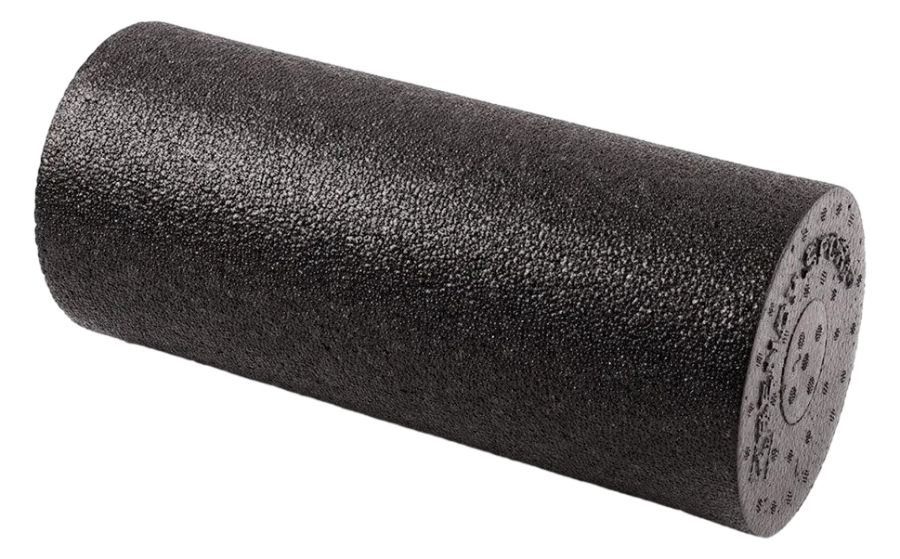
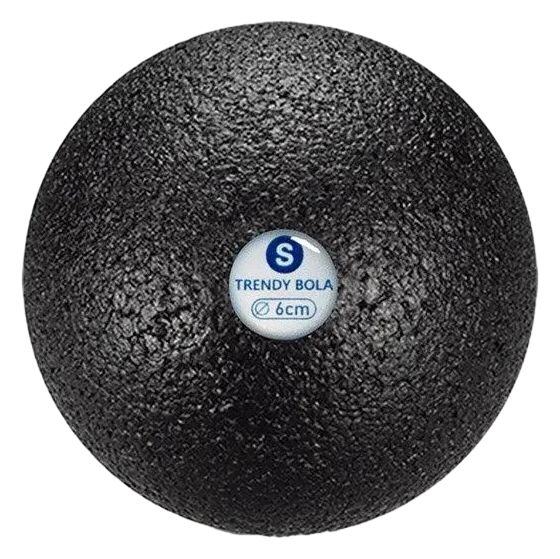
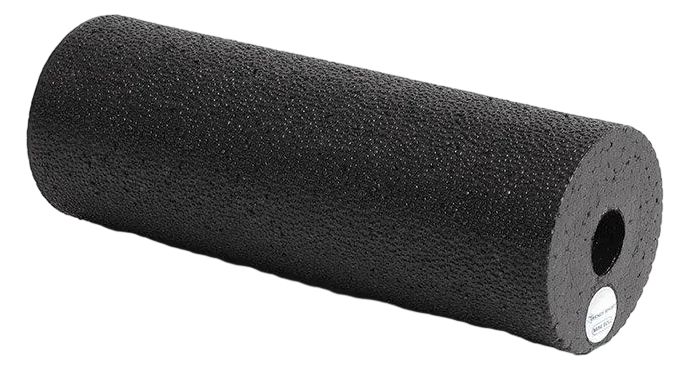
Start by choosing for the area you want to work on. A roller suits your calf and thigh, while a ball or small roller suits the sole of your foot. The table groups models by design and use.
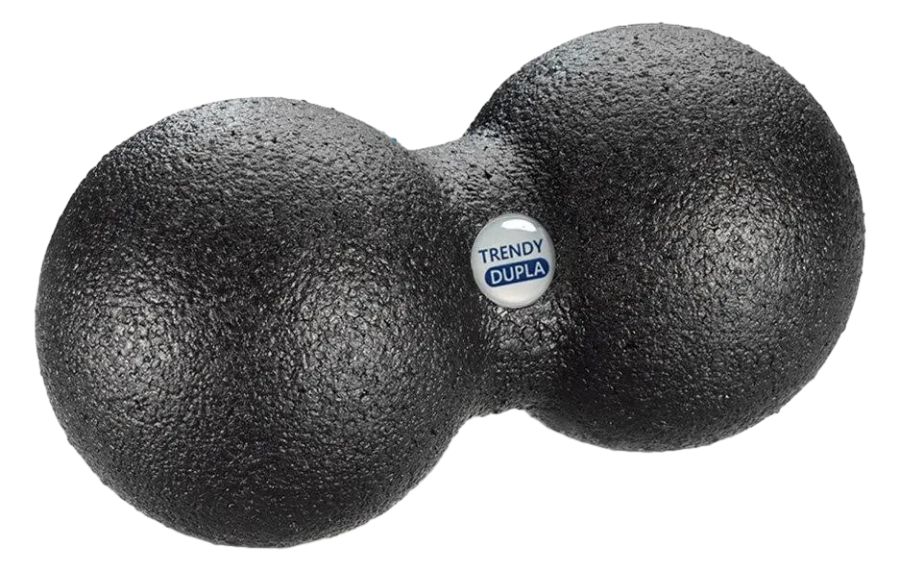
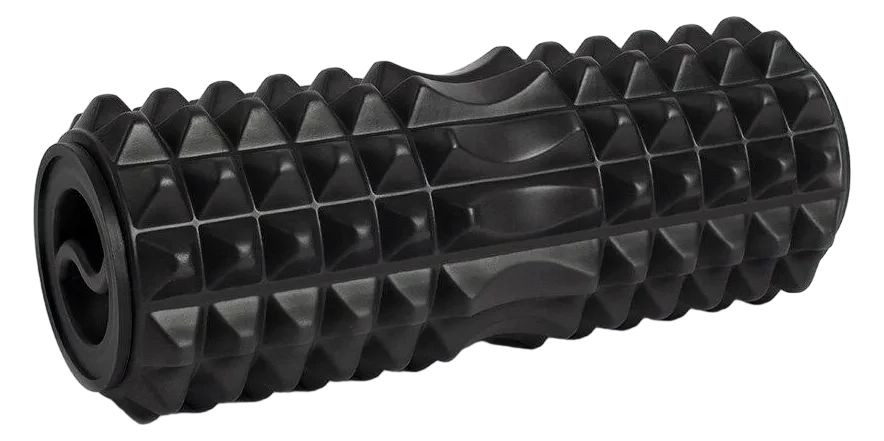
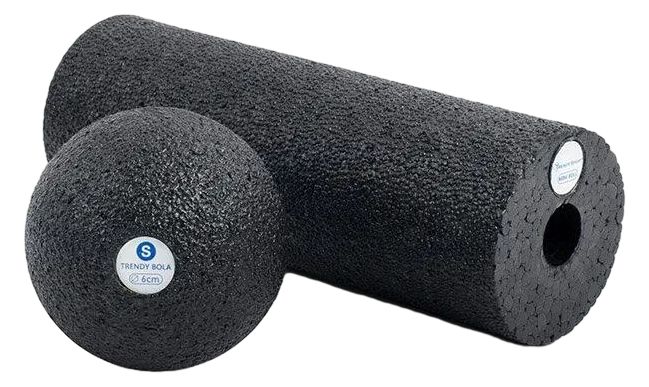
The EPP in Lua, Bola and Dupla is firm and holds its shape. EVA has a little more give, but on the Prego it covers a firm core. The manufacturer does not specify hardness ratings. Compare the material and construction rather than assuming an exact hardness level. The DAV recommends a softer model to start with; the soft, elastic PVC spiky massage ball is another option for small spots.
For price guidance, all amounts include VAT and are in CHF, as of November 2026: Lua 19.90, Lua Mini 7.90, Media Pilates half roller 27.30, Prego 29.90 and Faszien Set 9.50. The Bola costs 4.90 in size S, 5.90 in M and 6.90 in L. The Dupla version with an 8 cm diameter costs 6.20, and the one with a 12 cm diameter costs 8.30.
How do you control pace, pressure and duration when rolling?
The DAV guide recommends around 1 to 3 minutes per muscle group, very slow movements and focusing on the area you are working on.
Place the roller or ball against your chosen muscle area. Support yourself so you can reduce the load immediately.
Move slowly. Keep the muscles you are working on as relaxed as possible and keep breathing deeply and evenly.
Adjust the pressure so it stays comfortably tolerable. The clinic handout refers to the “two-thirds pain rule”. Do not try to reach a pain threshold.
Reduce the load as soon as you tense up against the pressure. Placing your second leg on top increases it; putting that leg down takes weight off.
How do you use a roller and ball on seven body areas?
Choose the area you want to work on. The shorter times for the sole of the foot and buttocks come from individual exercise examples from the Carolabad clinic.
Seven areas for using a roller and ball. The numbers refer to the key below; the lumbar spine is not rolled directly.
Image: saneq
1: Sole of the foot.
2: Calf.
3: Back of the thigh.
4: Outer thigh.
5: Buttocks.
6: Upper back.
7: Back of the neck and edge of the shoulder blade.
1. Sole of the foot with a massage ball
Skip this exercise if you have acute pain, skin injuries, bruises or open wounds. Stand up and place a ball under the sole of one foot. Keep your supporting leg slightly bent. Keep most of your weight on your supporting leg to begin with.
Roll the ball slowly under your sole. The clinic example suggests 10 seconds of rolling, followed by 20 seconds of controlled pressure on a tender spot.
Keep the pressure comfortably tolerable, then switch sides. A spot with acute pain is not one you should keep working on.
2. Calf with a roller
Skip this exercise if you have varicose veins, thrombosis or a calf with acute pain, redness or swelling. Sit on the mat, support yourself with your hands and rest your calf on the roller. Keep your other foot on the floor to begin with.
Work slowly on your calf muscles between the Achilles tendon and the back of your knee. Pull your foot towards you, then point it again.
Only place your second leg on top if the pressure remains comfortably tolerable. Take it off again as soon as you can no longer keep your muscles relaxed.
3. Back of the thigh with a roller
Place the roller under the back of one thigh. Support yourself with your hands and put your other foot on the floor.
Pull the toes of the leg you are working on towards you, as described in the clinic handout. Move slowly over the roller and use your supporting limbs to control the load.
Keep the pressure comfortably tolerable, then switch sides.
4. Outer thigh with a roller
Lie on your side with your outer thigh on the roller. Support yourself on your forearm and place your top foot on the floor in front of your lower leg.
Move slowly back and forth. Use your forearm and the foot on the floor to keep only a little weight on the roller.
Reduce the load if the pressure feels unpleasant. Tensing your muscle and holding your breath are not the aim of the exercise.
5. Buttocks with a ball or roller
Sit with one buttock on the ball or roller and support yourself with your hands.
Place the foot on the side you are working on onto your other thigh. Roll that buttock slowly and keep the pressure under control.
The clinic example suggests 40 seconds per side. Then switch sides, without forcing yourself to keep going for that long if you feel discomfort.
6. Upper back with the roller placed crosswise
Place the roller crosswise under your upper back and put your feet on the floor. Place your hands behind your head to support it.
Use your legs to move slowly over the roller. Keep the movement limited to your upper back and do not pull on your head.
Reduce the pressure if you cannot keep breathing in a relaxed, even way.
7. Back of the neck and edge of the shoulder blade against a wall
Stand with your back to the wall. Place Lua Mini, Dupla or a ball between the wall and your chosen muscle spot.
Lean back gently and move slowly. With the Dupla, your spine stays in the central groove, with the two rounded sections on either side.
Reduce the pressure by moving away from the wall. Do not use the large roller on the floor with your full body weight for this area.
Should you roll before or after training?
Before training, you can include rolling in your warm-up. The conclusions of the meta-analysis support this use. The general guidance of 1 to 3 minutes per muscle group, however, comes from the DAV, not from a uniform training protocol in the meta-analysis.
After training, the focus is more on perceived muscle soreness. The studies show small effects. This neither guarantees faster recovery nor means you should try to roll pain away.
For frequency, the clinic handout distinguishes between daily, very slow rolling and firmer rolling movements every two to three days. It links these to the aims of “releasing” and “strengthening” respectively. When starting out, slow movements you can control remain the priority.
When should you avoid rolling or seek medical advice first?
Additional rules for a vibrating foam roller
The Hyperice Vyper 3 offers three vibration levels and costs CHF 215.00 including VAT, as of November 2026. The meta-analysis does not establish vibration as an advantage. The following manufacturer instructions also apply to this model.
The DAV suggests around 1 to 3 minutes per muscle group. The clinic handout distinguishes between daily slow rolling and firmer movements every two to three days. If you experience symptoms, the listed reasons to stop and contraindications apply.
According to the DAV, the pressure should be comfortably tolerable. The “two-thirds pain rule” in the clinic handout is not an invitation to put up with pain until you can no longer bear it. Keep your muscle relaxed and keep breathing. Acute pain means: stop rolling.
The DAV recommends a softer roller to start with. EPP is firm and holds its shape, while EVA has a little more give. Look at the construction too: despite its EVA surface, the Prego has a firm core and pronounced bumps. Start with light pressure and check whether you can keep your muscles relaxed.
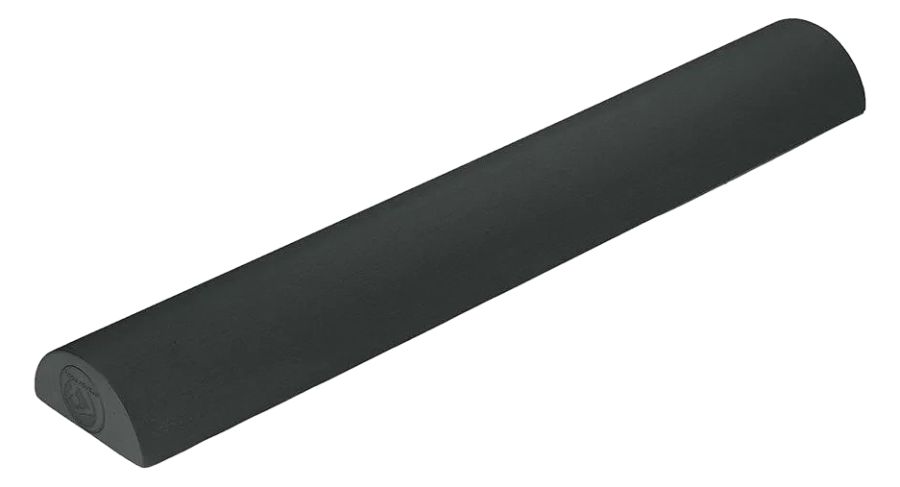
When rolling individual muscle areas, the massage surface matters most. The Media is a Pilates half roller: the flat side rests stably on the floor, while the rounded, textured side faces upwards. It supports your back lengthwise during balance and stabilisation exercises and when stretching while lying on your back.
The meta-analysis used here does not show that the vibrating foam roller presented is superior. The Vyper 3 adds three vibration levels and its own safety rules.
The clinic, DAV and Hyperice require a medical assessment beforehand. Discuss your situation and intended use with a doctor.
Still unsure? Ask us for advice on choosing a tool or visit our Showroom in Spreitenbach. You’ll find models to compare in the foam rollers category.