For indoors or outdoors, with air tyres or puncture-proof wheels? This is how you choose a rollator based on handle height, width and transport weight and clarify cost coverage in Switzerland.
Published on
· Updated on
·12 min read
Image: Produktbilder: drive Medical, DIETZ
A rollator should help you feel safe and be easy to use day to day. Before choosing a brand, consider where you need it, which size fits and whether you can lift and fold it. Check who will pay for it too.
The saneq editorial team prepared this guide using information from drive and DIETZ, the rollator guide from the Zentrum für Qualität in der Pflege (ZQP) and Swiss social insurance factsheets. The models are from our range; we have not carried out our own practical tests.
Where do you want to use the rollator?
First consider where you will most often need the rollator. This determines what you should pay attention to regarding width, wheels and weight.
Use
What to look out for
Examples
Apartment
narrow design, short frame, tray for dishes or laundry
If your requirements indoors and outdoors are very different, a second, narrow rollator for the apartment can be useful.
Rollator for outdoors: air tyres or puncture-proof wheels?
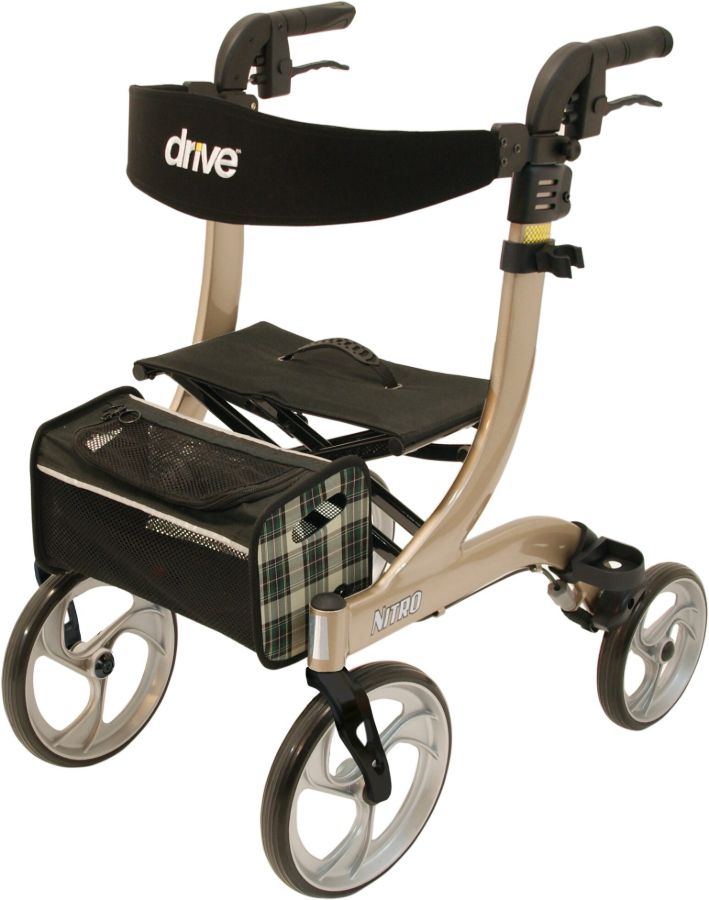
Check the intended use first: DIETZ permits the TAiMA XC only on firm, level ground. Large wheels can make it easier to cross small joints and edges on these surfaces. The Nitro has front swivel wheels with a diameter of 24.5 cm. On the TAiMA XC and M-GT, a tipping aid lets you lift the front wheels over a kerb. Ask someone to show you how to use it safely.
Pneumatic tyres can cushion shocks, but need regular pressure checks and can get punctures. Puncture-proof tyres, including soft PU tyres, work without air. The outdoor rollator TAiMA XC comes with either pneumatic tyres or puncture-proof soft PU wheels:
TAiMA XC
Air tyres
Soft PU wheels
Weight with cane holder
9.1 kg
9.8 kg
Overall width
67 cm
65 cm
Maintenance
Check air pressure
no pumping needed
If you mainly use asphalt and pavements, puncture-proof wheels are usually sufficient.
Rollator for home: check width and space in the apartment
At home, measure the narrowest part of each doorway with the door fully open. Check the space in corridors, between furniture and beside the bed too. Compare these measurements with the total width of the rollator, allowing some clearance for your hands.
The narrowest models in our range are the Nitro XS at 52 cm, the Roomba at 57 cm, and the Migo 2G and TAiMA S-GT at 58 cm each. The Nitro in size XS is for shorter people: its handles reach up to 77 cm. The short-framed Roomba is for indoor use only. It has a large tray and soft wheels that protect the floor, but no seat.
Which size fits? Check handle height and seat height
Handles that are too low make you bend forwards; handles that are too high make you raise your shoulders. Both make walking more tiring. Find the handle height that fits you as follows:
Put on the shoes you usually wear in everyday life.
Stand upright and let your arms hang loosely.
Have a second person measure from the floor to your wrist. This value is the starting point for the handle height.
Check whether the value is within the adjustable range of the rollator, ideally with some clearance above and below.
When walking, keep your feet roughly between the rear wheels and your elbows slightly bent. The ZQP describes this posture too. Start with the height measured at your wrist, then adjust the handles so you can walk upright and relaxed. Ask a professional for advice if you are unsure.
Rollator Nitro: comparison of four sizes
On the rollator Nitro, the frame size also determines handle height, seat height and width. Use your measured handle height to choose a size, then try the seat. You should be able to sit comfortably between the handles, place both feet securely on the ground and stand up again.
Values according to manufacturer. DIETZ specifies the overall height for the TAiMA models, which corresponds to the adjustable range of the handles. For the rollator with forearm supports Cristallo², the height of the supports counts instead of the handle height: 102 to 118 cm.
Lightweight rollator: How much weight can you handle?
A low weight makes it easier to lift the rollator over a kerb or threshold and into the car boot. If you rarely lift it, a good fit and stability matter more. Compare weights with the same accessories: some manufacturers include a bag or walking stick holder, while others leave them out. This can account for differences of a few hundred grams.
These are figures from the manufacturers; the TAiMA XC instructions include the walking stick holder in its weight. Follow the load limit in the instructions for your model. For DIETZ models, luggage counts towards the maximum user weight, and the bag, basket and tray also have their own load limits.
Does the rollator fit in the car?
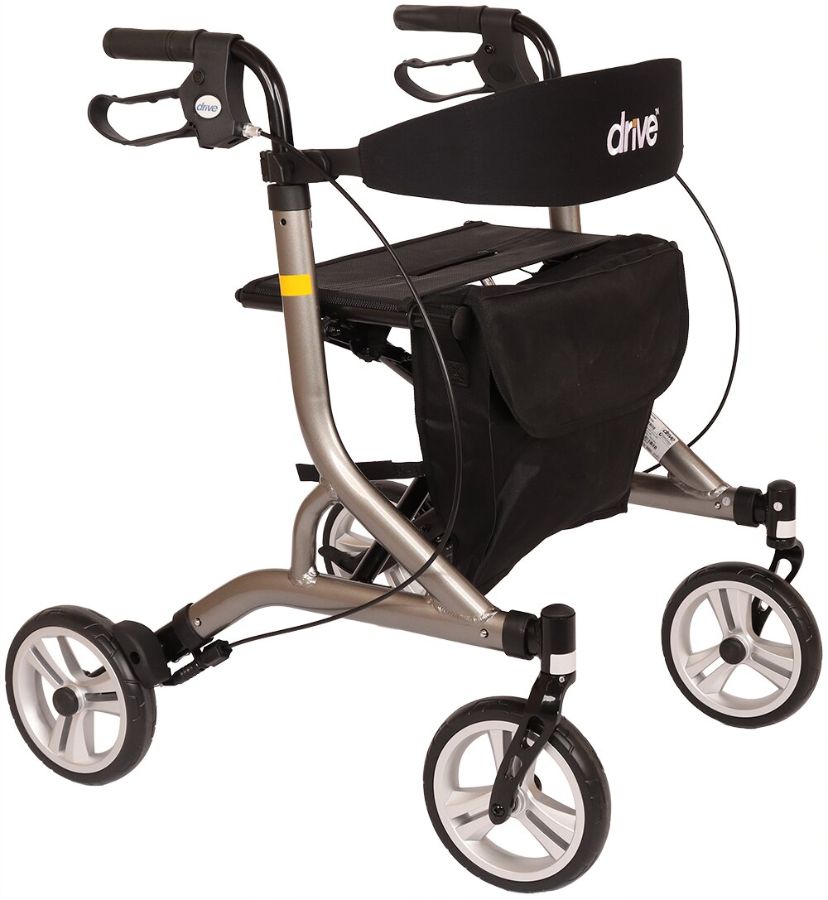
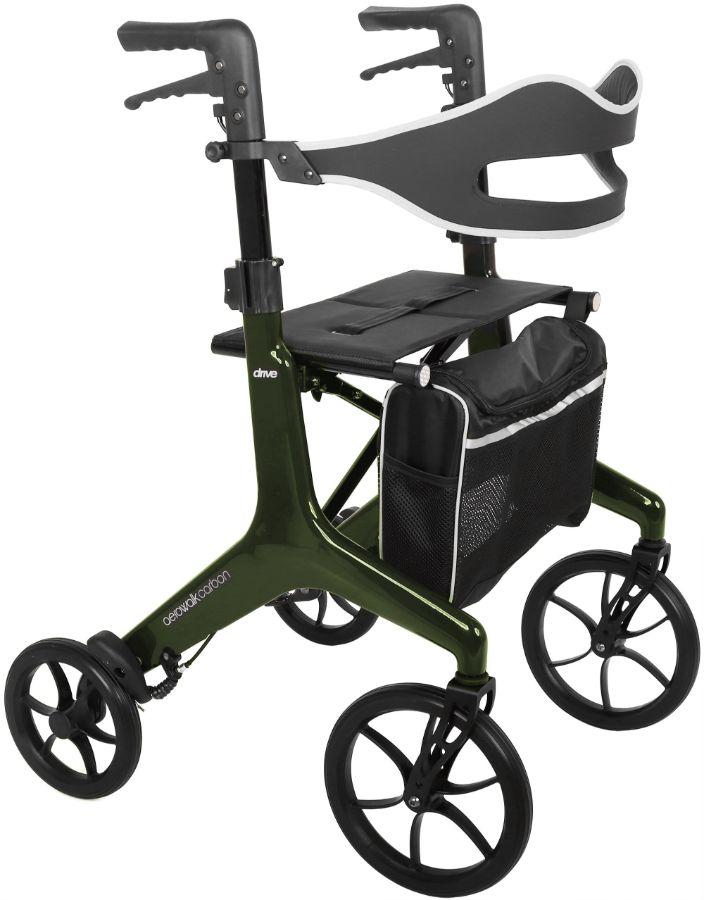
TAiMA models, the Nitro, Nitro SL and AeroWalk Carbon fold sideways to a width of 21 to 27 cm. The Cristallo, Migo 2G and Gigo 2G fold flat: they remain 58 to 61.5 cm wide, with a depth of 23 to 28 cm. Measure your boot opening and compare it with the width, height and length of the folded rollator. TAiMA models stand on their own when folded, which is useful during transport.
What you should try before buying
Can you reach the brake levers comfortably, and do you have enough hand strength to pull and lock them?
Turn on the spot with the rollator, for example in your narrowest hallway.
Can you fold, lock and open the rollator yourself?
Sit down with the parking brakes locked, then stand up again. Check that the back strap or backrest is firmly attached.
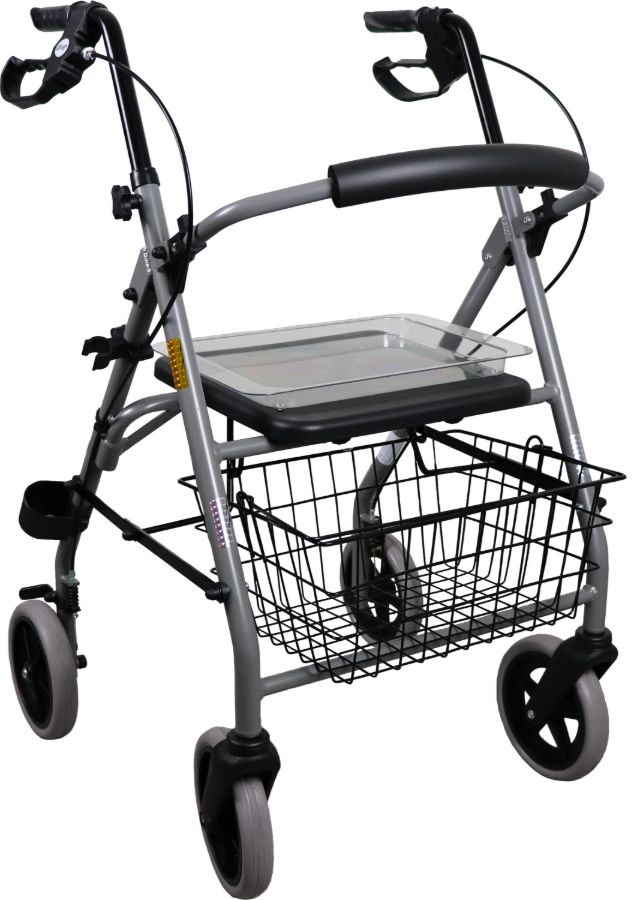
Do you need a basket, bag, tray, walking stick holder or reflectors? The basket and tray on the Cristallo each hold up to 5 kg.
Special cases: three wheels, forearm supports, transport chair
The three-wheeled Tri Walker is easy to manoeuvre. It is 25 cm wide folded and 61 cm open, so its width in use is similar to many four-wheeled models. It has no seat. If you lean heavily on a rollator when walking, ask a professional before buying whether three wheels will give you enough support.
On the rollator with forearm supports Cristallo², you bear weight through your forearms. This can help if your hands or wrists cannot take the full load. Ask in physiotherapy or occupational therapy whether this design suits you.
For longer outings, the Diamond Deluxe converts into a transport chair without tools so a companion can push you. With this function it weighs 10.3 kg, making it one of the heavier rollators.
What does a rollator cost in Switzerland, and does the health insurance pay?
The rollators presented here cost between CHF 99 and CHF 549 in our range. Examples are the Cristallo for CHF 99, the lightweight rollator Gigo 2G for CHF 119, the TAiMA XC for CHF 389 and the AeroWalk Carbon for CHF 549 (price status September 2026). Various bodies can cover the costs in Switzerland:
Ask your health insurance what your policy provides.
AHV
regularly no
Rollators are not on the regular AHV list of aids. Already granted IV benefits can continue in AHV age as long as the conditions remain fulfilled.
IV
if entitled
Rollators are on the IV list of aids. Whether and which model the IV covers is clarified by the IV office of your canton.
Supplementary benefits (EL)
possible
If entitled to EL, further aids can be financed or lent. Have this checked by the responsible EL office before purchase.
Pro Senectute
possible
For people of AHV age, if AHV or EL do not cover the costs. The advisory centre near you checks contributions or loan devices; there is no legal entitlement.
All models with current prices can be found under Buy a rollator.
Start safely and maintain the rollator
Walk inside the rollator, not behind it, and keep your upper body upright.
Before sitting down and standing up, apply both brakes.
Do not pull yourself up from a chair using the rollator when standing up.
Cross curbs at the flattest possible point or lift the front wheels with the tipping aid.
Practice the first routes with accompaniment, for example in physiotherapy or with relatives.
Check the rollator before every use as described in its instructions; for the TAiMA XC, DIETZ specifically lists the brakes, folding lock and fastenings. Pneumatic tyres also need regular pressure checks. The ZQP recommends having the rollator serviced in a specialist shop at least once a year.
Frequently asked questions about the rollator
Basic health insurance does not pay for a rollator because it is not on the List of Medical Aids and Devices (MiGeL, FOPH). Contributions from supplementary insurance depend on your policy. The IV may cover a rollator if you are entitled to its benefits; check this before buying.
Measure standing, with shoes and arms hanging loosely, from the floor to the wrist. This value should be within the adjustable range of the handles.
Pay attention to the upper value of the handle height. In our range, the Nitro in size L goes up to 101 cm, as well as the Cristallo and the Migo 2G up to 100 cm.
For frequent lifting into a car, models around 5 to 7 kg are comfortable to handle, such as the TAiMA S-GT at 5.6 kg or the Nitro SL at 6.3 kg, both with accessories. If you mainly use your rollator at home and around the neighbourhood and lift it less often, it can be heavier.
Pneumatic tyres can cushion jolts; their pressure needs regular checks. Compare how they feel to walk with, the maintenance and the weight on routes your model is intended for. DIETZ permits the TAiMA XC only on firm, level ground.
A narrow, short rollator like the Roomba with 57 cm width. For small people, the Nitro in size XS with 52 cm is also suitable.
Still unsure? You can reach our advice team from Monday to Friday between 8 and 17 on +41 56 511 60 99. Have your measured handle height, the width of the narrowest gap in your home and your body weight ready. Use our rollator checklist to try and compare models before ordering.
Sources: dimensions, weights and load capacity from drive and DIETZ, checked in September 2026. If the website and instructions for use differ, we follow the instructions. Intended use, wheels and tyre pressure of the TAiMA XC from the TAiMA XC instructions for use by DIETZ (version 4.1). Handle height, handling and maintenance from the guide “Rollator: Tips for safe handling” by the ZQP. Cost coverage from the List of aids and appliances (MiGeL) by the FOPH (as of 1 July 2026) and the factsheets AHV aids and IV aids (as of 1 January 2024).